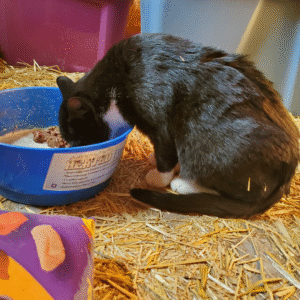
Growing up, my family and I had lots of animals which meant we had lots of grain which meant we had mice. We always had outside cats though to help keep the mouse population in check. So when we moved to the ranch, we knew we would eventually need barn cats. We had two cats but they were inside only cats. Within two weeks of moving to the ranch, we were welcomed by the mouse colony! Mice had gotten into the car and chewed up one of the kids’ carseats! Another day, I saw a mouse in the car as I was leaving to go to town. Despite my attempts to make sure the mouse was out of the car, I drove 2.5 hours terrified the mouse was going to run up my pant leg and make me crash! That didn’t happen thankfully but after that, I was done. I was getting more cats asap! I reached out to a cat rescue that was looking for homes for barn cats. About a week later, I had four outside cats. We’ve been here almost a year now, a few more barn cats and no more mice!
When I brought our first barn cats home, I was unsure how to acclimate them to our ranch. There wasn’t a ton of information out there on how to get them used to their new home since they weren’t born here. I really didn’t want to rescue these cats and then have something happen to them right away. I wanted to make sure I was doing my very best to provide a safe home for them. I’ve learned a few things along the way that may help you. Obviously your situation may be completely different than mine but hopefully some of these tips will help you figure out what will work best for your setup.
5 Tips for Barn Cat Introduction
- Confinement: Create a smaller space to confine them to initially. I’ve found that by confining them to a smaller space at first, it allows them time to decompress. They are changing homes again and it’s stressful. By doing this, they can decompress, learn where you feed them, what your schedule is for feeding them, and get used to the sounds around their new home. For an example, I have a large dog kennel that I place in the feed room of the barn. They can hear the other farm animals and they are fed in there. Once I let them out of the kennel, they know where to come to get food and where ‘home’ is. I don’t have the perfect setup yet but we make do with what we have. Its not Pinterest worthy either but it is realistic. The cats don’t care. The amount of time that you leave them confined isn’t a black and white answer either. I have left some in there for almost 2 weeks and others 3 days. I think it depends on the cats, the weather, and ultimately what your gut is telling you. Pay attention to the cat.
- Feeding: Feed in the same area and try to feed around the same time. Cats will learn your routine. This is especially important if you have very feral cats. They may not be around where you can see them but they are watching you. I’ve tried to free feed but this summer I had some other critters start eating their food. Now I regulate when I put food out a little more but the cats have all learned.
- Safe Spaces: Provide plenty of safe, warm and dry places. Some cats need more space than others. But by providing plenty of spaces, they can spread out or they can stay together. Again my setup is a work in progress but this past winter I did moving boxes filled with straw. They loved them. Some of the cats would pile all in one box and others liked their own box to themselves. I had these boxes stashed in different areas of the barn. I’ve seen lots of ideas about making more insulated boxes out of totes. I am hoping to make some of these for this winter for the other outbuildings. I have a few feral cats that like to keep their distance.
- Trust: The biggest thing about earning a barn cats trust is to not push them. Don’t try so hard to pet them. Let them come to you. Sit there while they eat and talk to them. Once they learn that you aren’t there to hurt them, they will come around more often and may even choose to be pet. It takes time. A true feral cat will never let you pet them but often times, cats aren’t truly feral. I’ve had 2 cats that I thought were feral come around and just recently let me pet them. It took 10 months but it was worth every day!!
- Love: Love if they want to be loved on. But if they don’t, give them the respect to love them from a distance. This is a hard one for me because I want to love up on all animals. But some just don’t want that. And that is okay.
Having barn cats is a wonderful partnership. You are giving these cats a second chance at a real life. You are providing food and shelter and they give back by being the secret service of the ranch, protecting it from invasions of mice and other rodents. So if you can feed and provide shelter for some barn cats, reach out to your local rescue. Many have programs where they have cats that need to go to barn homes. These cats are fixed and vaccinated and ready to have a second chance with you on your farm/ranch/homestead!
Meet our Barn Cats